


Climate change is one of the defining challenges of our time. Across industries, companies are setting ambitious climate targets and need reliable, consistent data on the carbon footprints of the products they buy and sell. Quantifying the greenhouse gas emissions associated with a product across its life cycle is essential for informed decision-making.
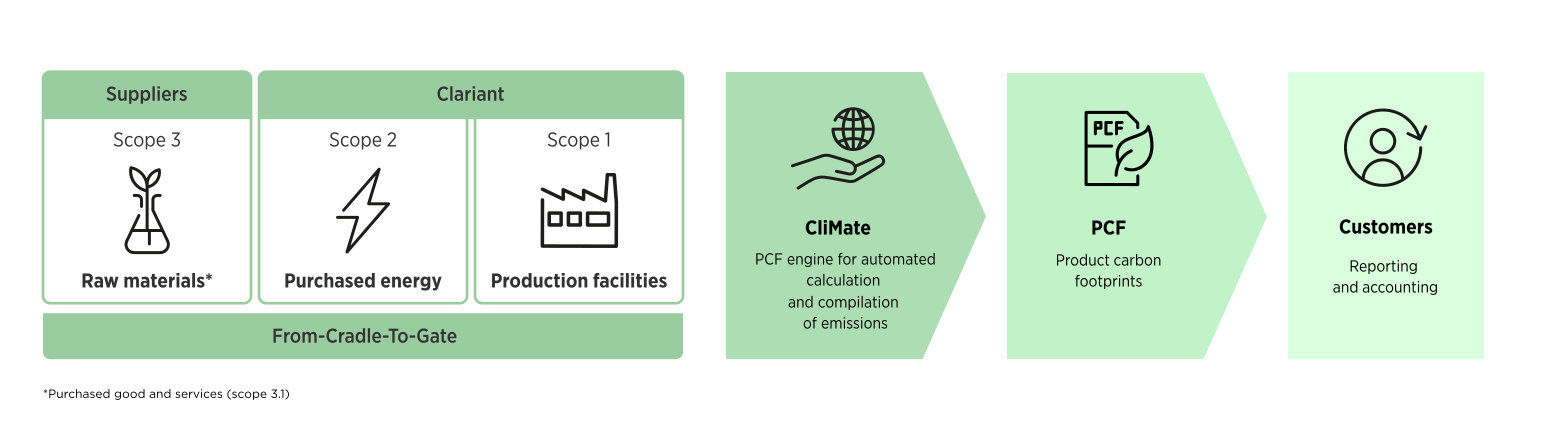
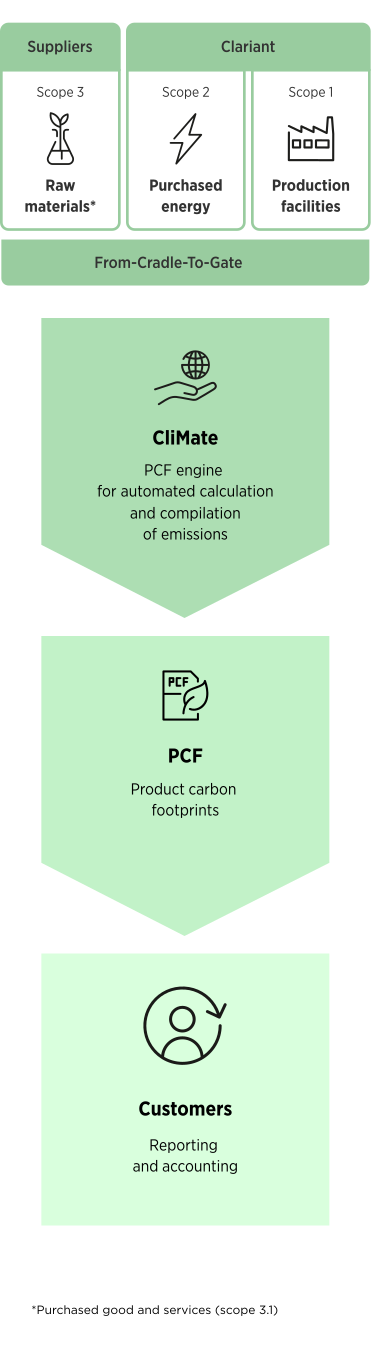
Clariant provides product carbon footprint information for a large share of its portfolio through its carbon footprint calculation engine, CliMate. The engine gives customers transparent, standardized insights into the greenhouse gas performance of our products. We were among the first chemical companies to offer this level of transparency across such a broad range of products.
The CliMate engine supports our progress toward its science-based climate targets by capturing emission reductions at product level—reflecting improvements both in our supply chain and in our own operations. Today, most Clariant products come with carbon footprint calculations aligned with ISO 14067 and the Together for Sustainability (TfS) Guideline v3.0. We continue to expand coverage by working closely with suppliers through our engagement program and by collaborating with customers on shared footprint transparency needs.
Transparency built on recognized standards
The CliMate engine calculates product carbon footprints in accordance with ISO 14067 and the Together for Sustainability (TfS) Guideline v3.0—key references for carbon footprint accounting in the chemical industry. Developed by Clariant experts together with NDC Group, the engine integrates with our existing greenhouse gas tracking systems. CliMate was validated in 2022 by experts at the independent organization TÜV Rheinland in Germany. In 2025, the engine was further validated against the Together for Sustainability (TfS) Guideline v3.0, confirming our alignment with industry expectations for robust, comparable PCF data. The TÜV Rheinland certificate is available for reference here.
Actionable insights for better decisions
The engine significantly shortens the time required to prepare product carbon footprints, enabling faster and more consistent assessments across our portfolio. With cradle-to-gate emissions data at hand, customers gain a clearer understanding of the greenhouse gas intensity of their purchased products. Internally, these insights also support Clariant’s supplier engagement efforts and help identify opportunities to reduce emissions beyond our own operations.
Enabling collaboration across the value chain
Clariant is an active member of the Together for Sustainability (TfS) initiative and contributed to the development of the chemical industry’s guideline for product carbon footprint and scope 3 accounting. The TfS guideline harmonizes calculation approaches across the industry and is applicable to the vast majority of chemical products—strengthening comparability, transparency, and collaboration across value chains.